Indonesia Nickel and Stainless Steel: How One Country Changed the Global Supply Chain
Published: 2026-08-06 Views: 161
From ore quotas to export controls — why the world's largest nickel producer moves the pricing of 304 and 316L pipeline products
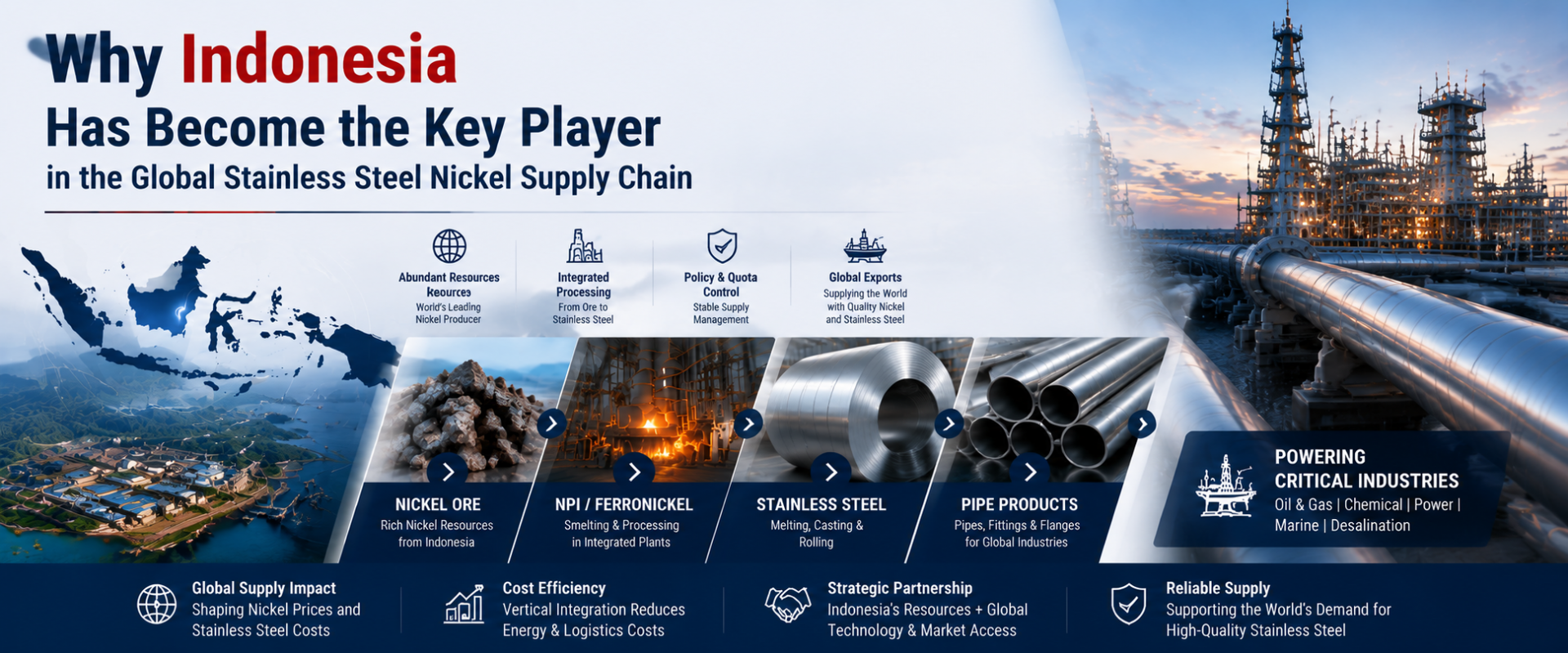
For buyers of stainless steel pipes, fittings, and flanges, the price of 304 and 316L products has always been closely tied to the nickel market. Yet in recent years, a single country has come to dominate that market more than any other: Indonesia. From mine quotas to export bans and downstream industrial policy, Indonesia's decisions now directly affect the cost curve of 300-series stainless steel worldwide. This article explains how — and what it means for pipeline product procurement.
Indonesia's Rise as the World's Largest Nickel Producer
According to USGS data, global nickel mine production in 2025 reached approximately 3.9 million metric tons, of which Indonesia accounted for roughly 2.6 million tons — nearly two-thirds of the world total. The next largest producer, the Philippines, managed only about 270,000 tons. This is not a competitive market of many suppliers; it is a highly concentrated supply structure in which one country sets the tone.
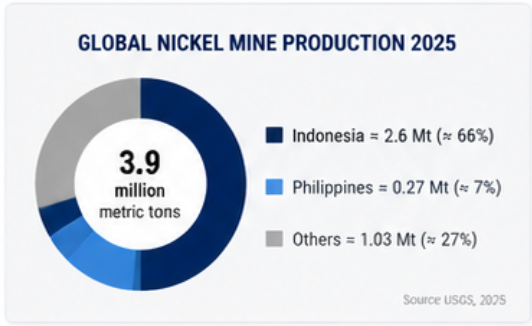
When other producers adjust output, the market notices a marginal shift. When Indonesia changes its production quota, global nickel prices, nickel iron (NPI) costs, and stainless steel input economics are all recalculated.
From Nickel Ore Exporter to Stainless Steel Powerhouse
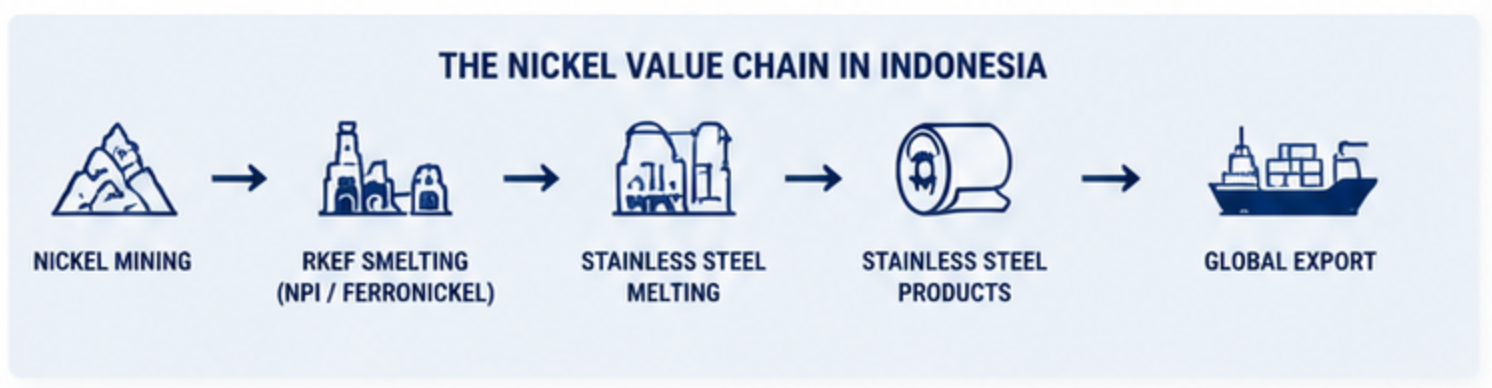
Indonesia's real strategic advantage is not simply having nickel ore. It is the deliberate policy of keeping value added within the country. Indonesia's 2020 nickel ore export ban transformed the country from a raw material supplier into a downstream processing hub. The result is a transformation of what Indonesia sells to the world:
· Nickel ore (no longer exported raw)
· Nickel pig iron (NPI) and ferronickel (FeNi)
· Nickel matte and mixed hydroxide precipitate (MHP)
· Stainless steel slabs and hot-rolled coils
Industrial parks such as Morowali (IMIP) have become among the world's largest vertically integrated nickel and stainless steel complexes, combining mining, RKEF smelting, coal-fired power, stainless steel melting, and port logistics in a single location. This integration compresses transport, inventory, and energy costs to a level that is difficult to replicate elsewhere.
The 2026 Policy Shift: Quota Cuts and Export Controls
In 2026, Indonesia signaled a more assertive approach to managing its nickel resources. Two policy moves have particularly affected the market:
1. RKAB Production Quota Reduction
Indonesia's annual Work Plan and Budget (RKAB) for nickel mining was cut from approximately 379 million wet metric tons in 2025 to a range of 260–270 million tons in 2026 — a reduction of more than 30%. The Ministry of Energy and Mineral Resources (ESDM) further estimated actual 2026 output at around 209 million tons, including 540,000 tons of nickel iron and 92,000 tons of nickel matte. The quota review cycle was also shortened from three years to one year, giving Jakarta tighter short-term control over supply.
2. Nickel Iron and NPI Export Controls
Effective June 1, 2026, Indonesia's Ministry of Finance issued regulation KMK No. 32/MK/BC/2026, imposing export controls on nickel iron and NPI under HS Code 7202.60.00. The move extends Indonesia's downstream strategy beyond raw ore to semi-finished nickel products, encouraging further domestic processing into stainless steel and battery materials before export.
Market Impact: Prices and Trade Flows
These policies have already reshaped global nickel and stainless steel trade flows:
|
Indicator |
2026 Data |
Trend |
|
LME Nickel Price |
Fell from ~$30,000/t (2022 peak) to under $18,000/t; low of ~$14,200/t in late 2025 |
Volatile, policy-driven |
|
China Nickel Iron Imports (H1 2026) |
5.08 million tons, down 7.09% YoY |
Declining due to quota cuts |
|
China Imports from Indonesia (Jun 2026) |
726,700 tons, down 28.15% YoY |
Sharp reduction |
|
Indonesia Stainless Steel Exports (May 2026) |
~384,000 tons, down 19.59% YoY |
Softening export volumes |
|
Indonesia Stainless Export Ratio |
~99% of production is exported (domestic consumption minimal) |
Export-dependent |
China remains the dominant buyer, receiving approximately 98% of Indonesia's nickel iron exports in the first five months of 2026. Notably, roughly three-quarters of Indonesia's nickel smelting capacity is backed by Chinese capital — creating a deeply interdependent relationship in which Indonesia controls the resource and administrative levers, while Chinese firms provide technology, equipment, and market access.
What This Means for Stainless Steel Pipe Buyers
For procurers of 304 and 316L stainless steel pipes, fittings, and flanges, the Indonesia factor has three practical implications:
1. Cost Volatility Is Here to Stay
Nickel accounts for a significant share of 300-series stainless steel production costs. With Indonesia controlling roughly two-thirds of global nickel supply and actively managing quotas and exports, buyers should expect periodic price swings driven by Jakarta's policy announcements rather than purely by market fundamentals.
2. Supply Chain Concentration Requires Risk Management
The concentration of nickel processing in Indonesia — and of stainless steel production in China, which in 2025 produced approximately 40.87 million tons (about 64% of global output) — means that disruptions in either country can ripple through delivery schedules. Diversifying suppliers, maintaining safety stock for critical projects, and locking in prices for large orders are prudent strategies.
3. Material Substitution May Accelerate
High and volatile nickel prices increase the incentive for downstream users to consider alternatives: 400-series ferritic stainless steels contain no nickel, while 200-series grades use manganese and nitrogen to reduce nickel content. For applications where corrosion requirements permit, these grades can offer cost stability — though they are not direct substitutes for 316L in chloride or offshore service.
Looking Ahead
Indonesia's grip on the nickel market is not absolute. High-carbon smelting routes may face growing pressure from green procurement and carbon border regulations. Frequent policy changes encourage investors to seek alternative sources in Madagascar, Tanzania, and New Caledonia, though these projects require years to reach comparable scale. And rising stainless steel scrap usage can reduce dependence on primary nickel over time.
Yet for the foreseeable future, the global 300-series stainless steel cost curve will continue to run through Jakarta. For pipeline product buyers, monitoring Indonesia's RKAB quotas, export regulations, and nickel price movements is no longer optional — it is essential procurement intelligence.
Zhuoli Pipeline supplies 304/316L, duplex, and super duplex stainless steel pipes, fittings, and flanges with full material traceability. Contact us NOW: commercial@zhuoli-pipeline.com .