
Major Oil & Gas Pipeline Projects in 2026: Global Energy Infrastructure and Material Trends
Published: 2026-07-28 Views: 98
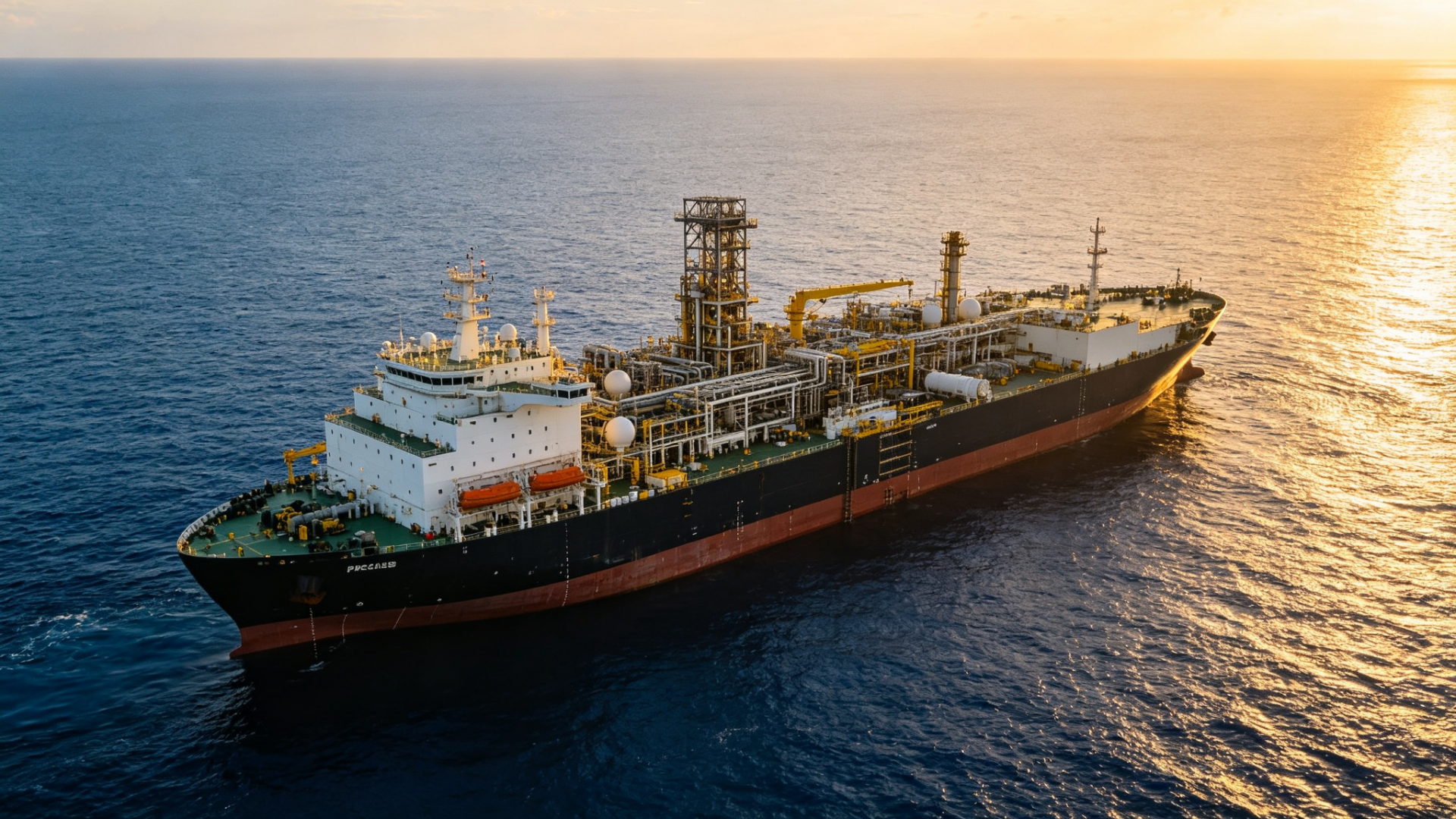
FPSO platform in deepwater operation — a key driver of corrosion-resistant pipeline demand
Global energy infrastructure is entering a new investment cycle. Offshore developments, LNG expansion projects, gas transmission upgrades, and pipeline integrity programs are creating strong demand for reliable piping systems.
From large-diameter carbon steel transmission pipelines to corrosion-resistant duplex stainless steel components, material selection plays a critical role in improving pipeline reliability, safety, and lifecycle performance.
Major Pipeline Projects by Region
South America, Southeast Asia, and the Middle East are experiencing significant oil and gas infrastructure investment. These projects are increasing demand for carbon steel pipelines, stainless steel fittings, duplex piping systems, and corrosion-resistant alloys.
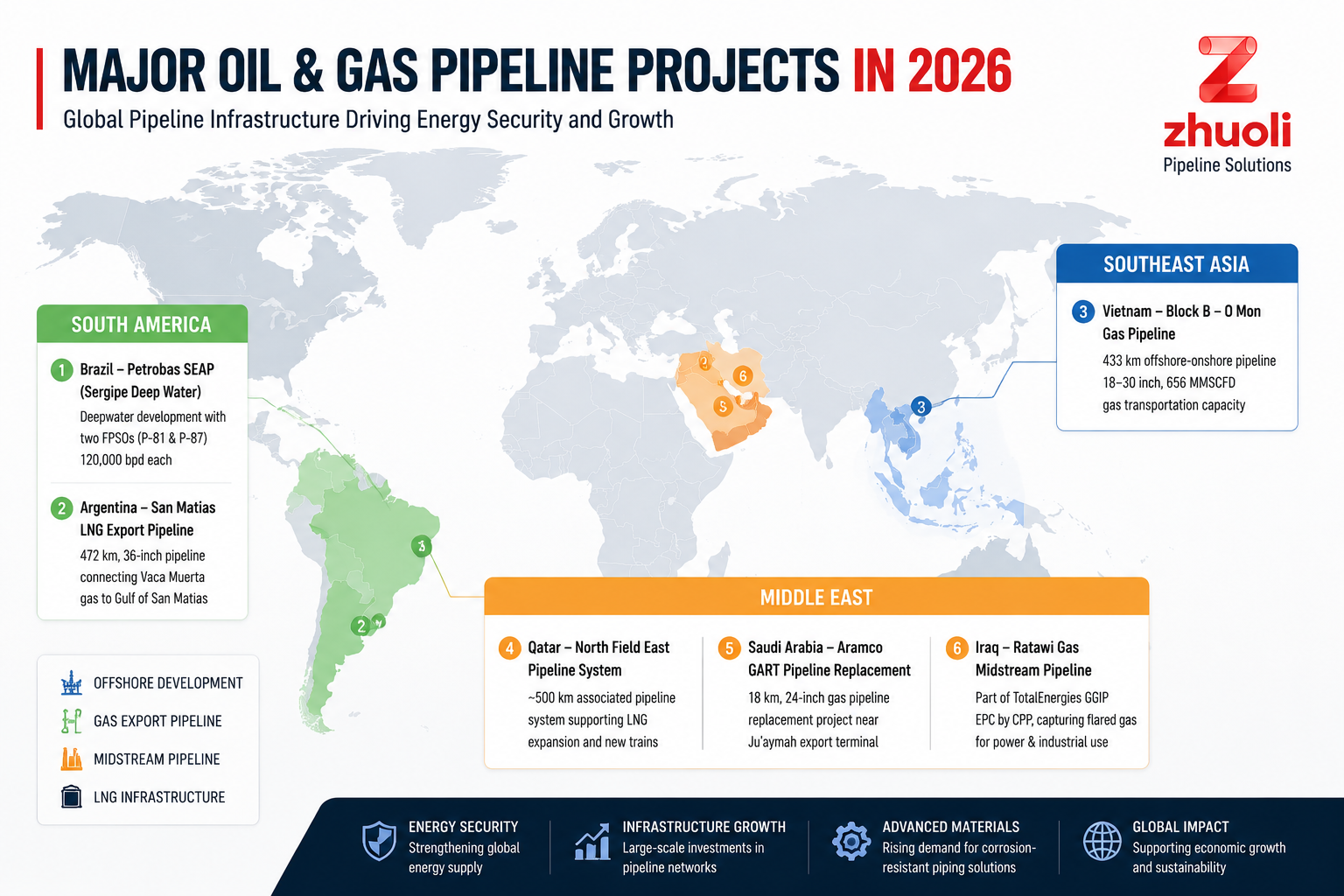
Brazil — Petrobras Sergipe Deepwater (SEAP) Development
Petrobras is advancing the Sergipe Águas Profundas (SEAP) development in Brazil’s Sergipe-Alagoas Basin, representing a major deepwater oil and gas project in the country’s northeast region.
The development includes two FPSO units, SEAP-I (P-81) and SEAP-II (P-87), each designed for approximately 120,000 barrels per day of oil production. The projects also include offshore gas processing and export infrastructure connecting offshore production facilities to shore.
Deepwater projects typically require high-performance materials, including duplex and super duplex stainless steels, for seawater systems, subsea equipment, and corrosion-critical piping applications.
Argentina — San Matías LNG Export Pipeline
Argentina’s San Matías pipeline project is a key component of the country’s LNG export strategy, connecting Vaca Muerta shale gas resources with export infrastructure on the Atlantic coast.
The project includes a 472-kilometer, 36-inch diameter gas pipeline connecting Tratayén in Neuquén Province to the Gulf of San Matías.
Large-diameter transmission pipelines are primarily constructed using carbon steel line pipe, while compressor stations, metering facilities, valves, fittings, and process systems require stainless steel and alloy materials.
Vietnam — Block B – O Mon Gas Pipeline
Vietnam’s Block B–O Mon gas pipeline project is a major offshore-to-onshore gas infrastructure development designed to supply natural gas to power generation facilities in the Mekong Delta region.
The project includes offshore and onshore pipeline sections connecting Block B gas resources with the O Mon power complex.
Offshore pipeline systems typically require advanced corrosion protection including coatings, cathodic protection, concrete weight coating, and corrosion-resistant materials for critical components.
Qatar — North Field East Pipeline System
QatarEnergy’s North Field Expansion is one of the world’s largest LNG development programs. LNG facilities require high-integrity piping systems for low-temperature service.
Common materials include 304L and 316L stainless steel, cryogenic-grade materials, and specialized alloys.
Saudi Arabia — Aramco GART Pipeline Replacement
Saudi Aramco is upgrading sections of its gas transmission network through replacement projects such as the GART-22 pipeline.
The project involves replacing an existing 24-inch pipeline section near the Juaymah export terminal area, supporting reliability and integrity improvement of Saudi Arabia’s gas infrastructure.
Carbon steel remains the primary material for transmission pipelines, while stations, instrumentation systems, and process connections require stainless steel fittings, flanges, and tubing.
Iraq — Ratawi Gas Midstream Pipeline
The Ar Ratawi Gas Midstream Project is part of TotalEnergies’ Gas Growth Integrated Project (GGIP) in southern Iraq.
The project aims to recover associated gas currently flared from oil fields and process it for power generation and industrial applications. Pipeline systems within the project include sour-gas and processed-gas transportation infrastructure.
Because sour-service environments contain hydrogen sulfide (H₂S), material selection often requires compliance with NACE MR0175 / ISO 15156 requirements, with duplex stainless steels and nickel alloys considered for severe corrosion conditions.
Pipeline Material Selection Guide
· Carbon steel line pipe remains dominant for long-distance transmission, with corrosion allowance and external coating.
· Duplex and super duplex stainless steel are standard for subsea flowlines, risers, and seawater systems in deepwater projects.
· Austenitic stainless steel (304/316/316L) is widely used in process plants, compressor stations, and LNG facilities.
· Nickel alloys are specified for extreme sour service, high-temperature, and strong-acid environments.
· Pipeline replacement and maintenance programs are creating steady demand for fittings, flanges, and small-bore tubing across all regions.
Zhuoli Pipeline supplies carbon steel, stainless steel, duplex, and nickel alloy pipes, fittings, and flanges for onshore and offshore pipeline projects worldwide. Contact us NOW:commercial@zhuoli-pipeline.com .